
Cheung Chau Bun Festival 2026
The Cheung Chau Bun Festival, also known locally as the Cheung Chau Da Jiu Festival, stands as one of Hong Kong’s most distinctive and longstanding traditional events.
Held from 21 to 25 May 2026, this five-day observance turns the car-free island of Cheung Chau into a centre of Taoist ritual, community participation, and cultural performances.
© Culture Plus
Historical Roots
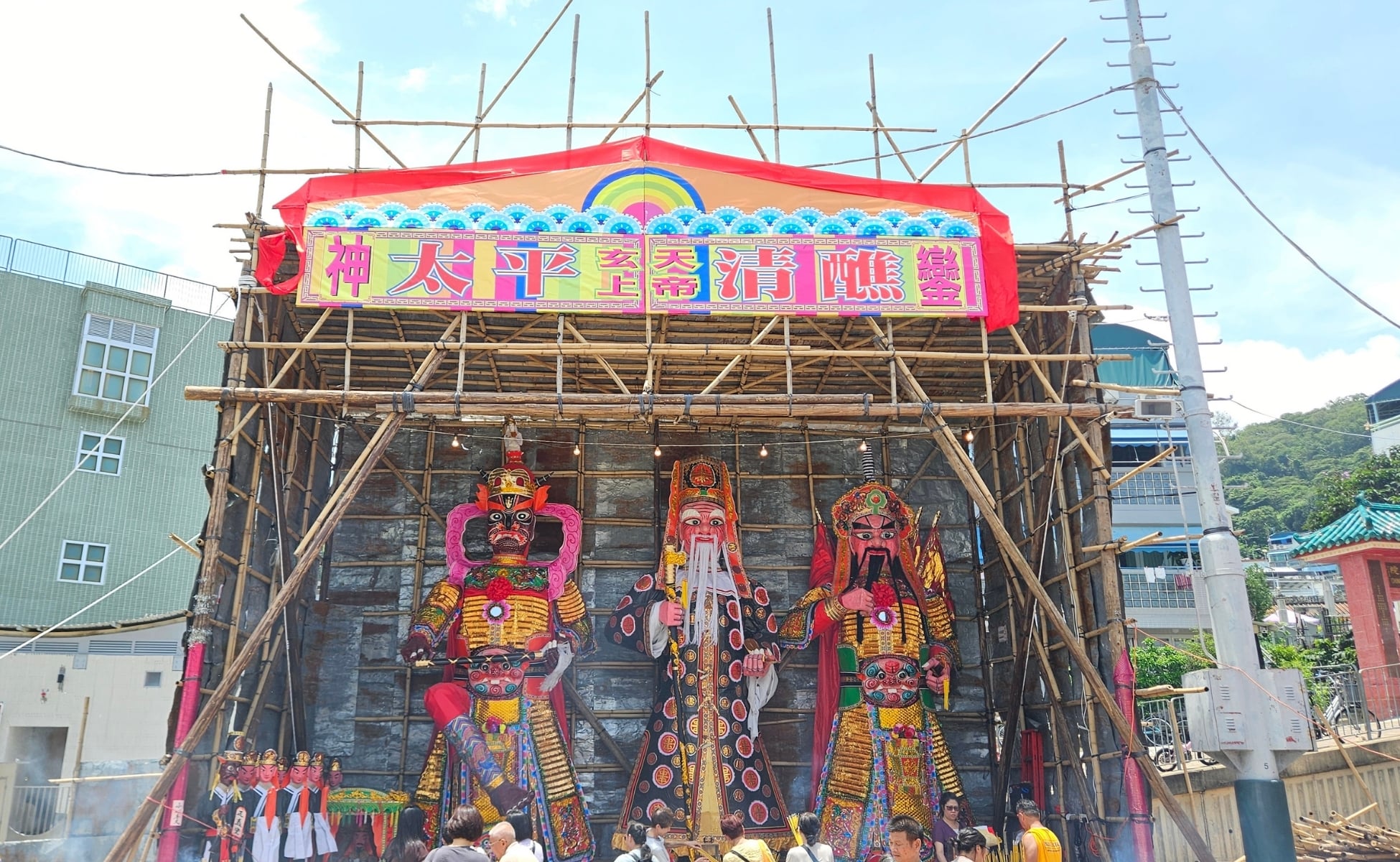
The Cheung Chau Bun Festival originated in the late 18th or early 19th century. Legend holds that the island was once struck by a severe plague and overrun by pirate attacks. Islanders invoked the protection of Pak Tai (Xuan Tian Shang Di), the Taoist deity of the North and a protector against evil. They paraded his statue through the streets, performed rituals, and the troubles reportedly subsided. In gratitude, the community established an annual thanksgiving ritual at the Pak Tai Temple.
What began as a modest Taoist Jiao (offering) ceremony to bring peace and harmony (“Tai Ping”) has since developed into one of Hong Kong’s most prominent cultural events. Recognized on China’s national list of Intangible Cultural Heritage, the festival blends religious observance, community bonding, and festive traditions.
© Culture Plus
Taoist Ceremonies and Sacred Traditions
At its heart, the festival remains a grand Taoist Jiao — a major ritual offering dedicated to restoring harmony and peace. Preparations involve erecting altars, inviting Taoist priests to conduct ceremonies, and making extensive offerings.
Main spiritual components include:
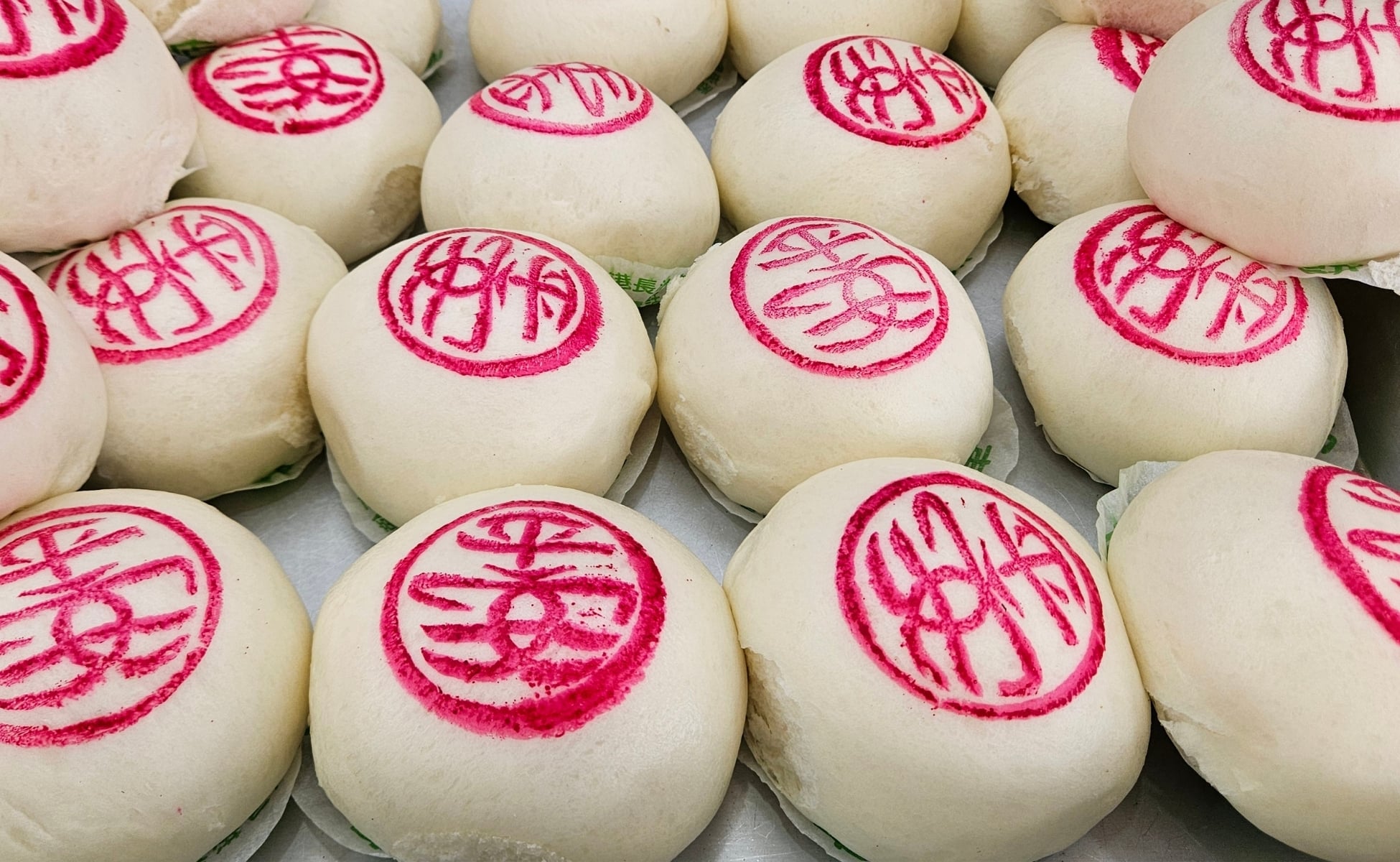
- Offerings and Purification: many islanders adopt a vegetarian diet during the festival. Large quantities of “peace buns” (Ping On buns) — steamed buns imprinted with auspicious characters for safety and prosperity — are prepared and stacked into towering structures. These buns symbolize good fortune, and distributing them to the community spreads blessings and protection.
- Appeasing Wandering Spirits: a vital ritual involves preparing vegetarian offerings for the ghosts of land and sea, followed by the chanting of sutras to guide them toward salvation.
- Deity Processions: Statues of Pak Tai and other deities are carried through the streets to inspect every corner of the island and drive away evil influences, echoing the original plague-ending parade.
These religious observances are accompanied by Cantonese opera performances and traditional music, which help safeguard and transmit the island’s cultural heritage.
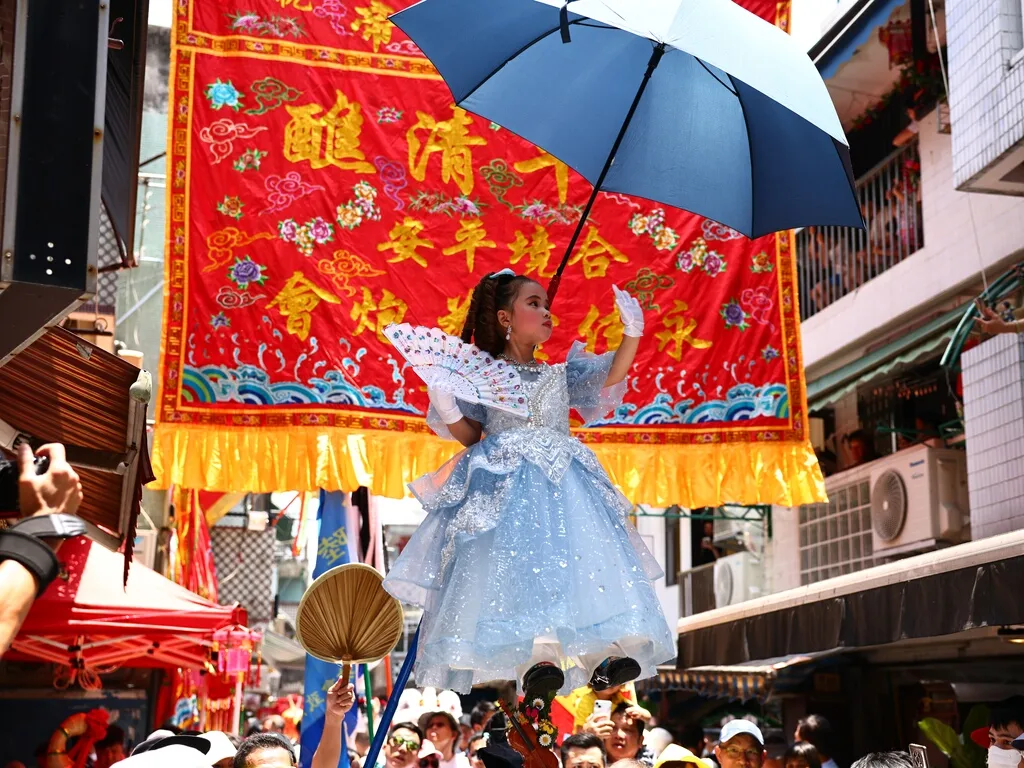
Photo courtesy of Hong Kong Tourism Board
The Piu Sik Parade
One of the festival’s most striking visual highlights is the Piu Sik Parade (“Floating Colours”), scheduled for 24 May 2026. In this iconic procession, children, often under the age of ten, are dressed as Taoist deities, legendary heroes, historical figures, or even contemporary icons. They are secured onto concealed steel frames attached to poles, swords, or fans, creating the illusion that they are floating gracefully above the crowds.
The parade also features lion dances, drumming troupes, and other costumed performers. Families regard selection for the parade as a profound honour, and the event serves both as entertainment and a spiritual act of devotion. The procession culminates with a rush back to the Pak Tai Temple, where the first to greet the deities receive special blessings.
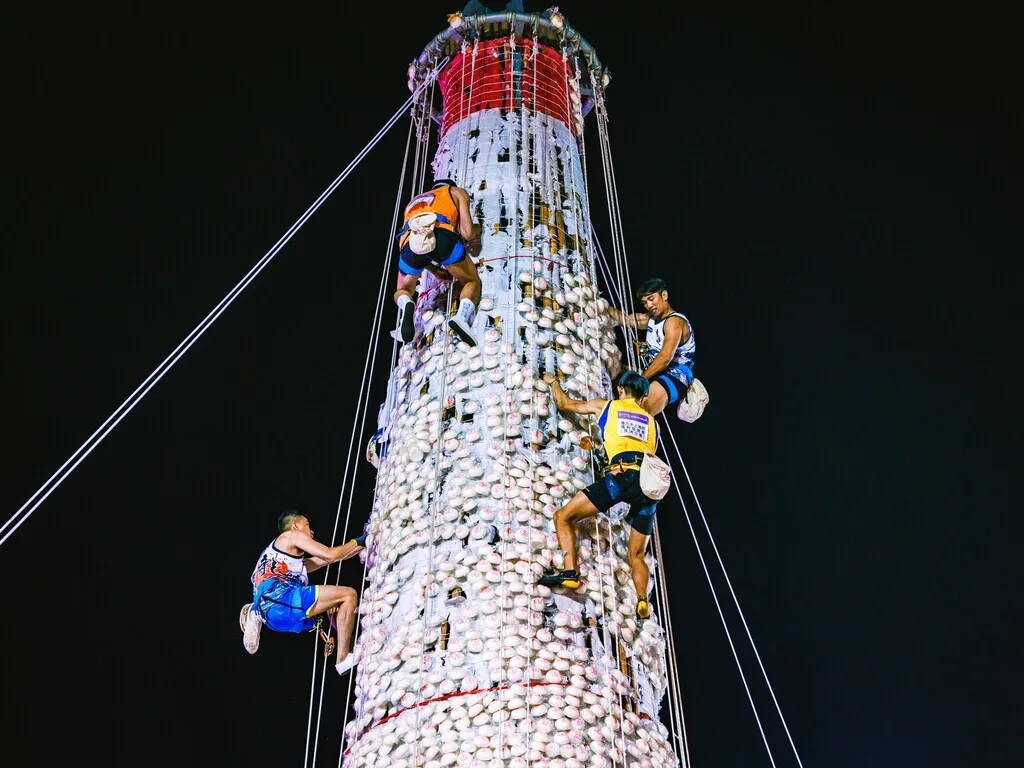
Photo courtesy of Hong Kong Tourism Board
The Iconic Bun Scrambling Competition
The highlight of the entire festival arrives on the night of 24 to 25 May 2026, when the Bun Scrambling Final kicks off at 11:30 pm at the soccer pitch beside the Pak Tai Temple. Participants, selected through rigorous training sessions and qualifying rounds held in April and May, will race to climb a towering steel scaffold covered with thousands of “peace buns.”
Each climber has a limited time — typically three minutes — to collect as many buns as possible, with higher-placed buns awarding more points. Winners earn titles and the symbolic “Full Pockets of Lucky Buns.”
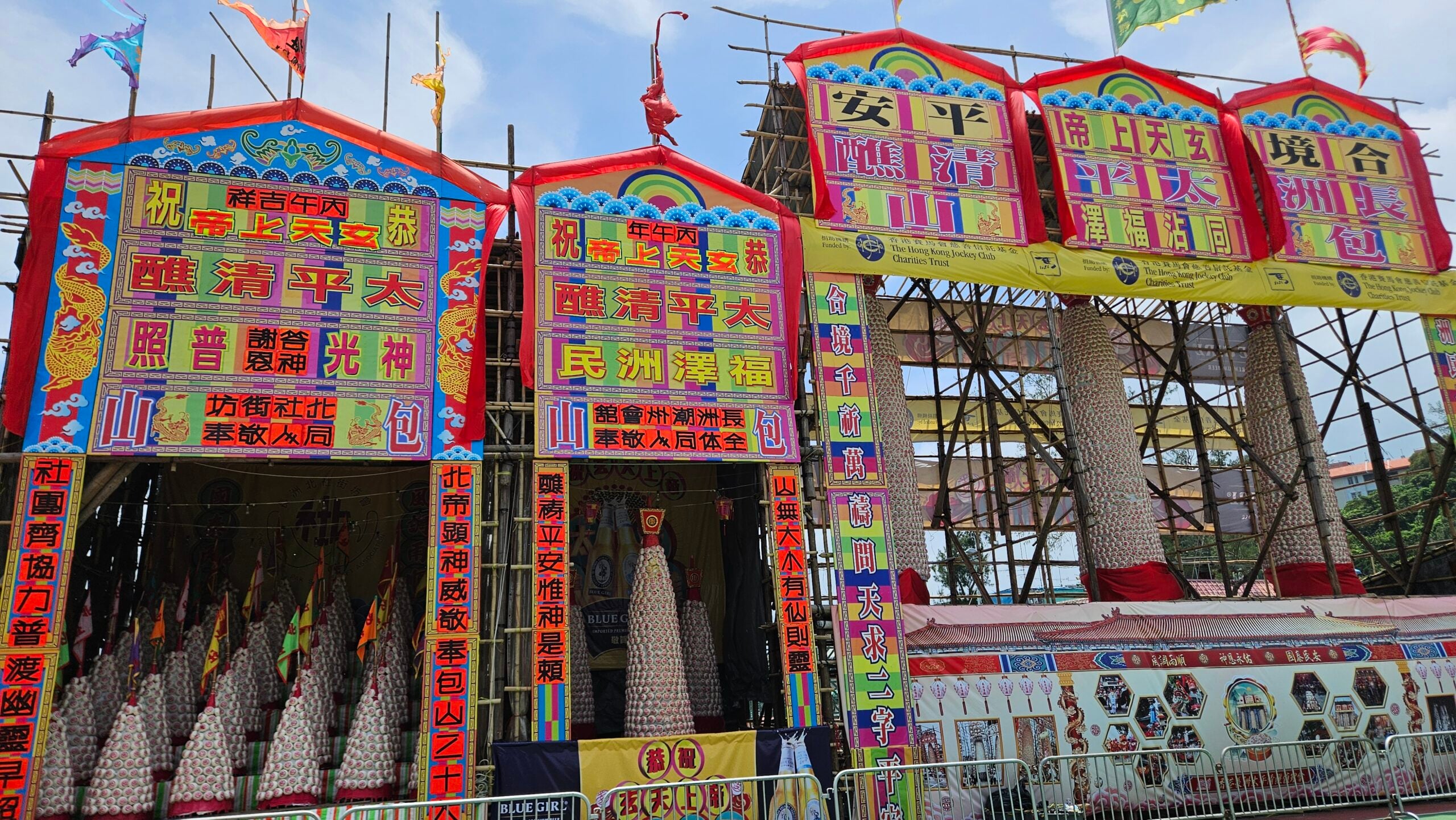
© Culture Plus
* * *
For both participants and spectators, the festival provides a tangible connection to ancestral traditions. By blending solemn rituals, theatrical performances, and intense athletic competition, it creates a rich, multifaceted experience that continues to evolve while remaining firmly grounded in its Taoist roots.
Today, the Cheung Chau Bun Festival stands as a cornerstone of Hong Kong’s cultural calendar, offering a valuable window into the depth of local beliefs, customs, and spiritual heritage.
* * *
Central Ferry Pier No. 5 – Cheung Chau: check the schedule HERE.