EVENT DESCRIPTION
gdm Hong Kong presents the first solo exhibition in Greater China of Tang Chang (1934–1990), curated by art historian Sheryl Gwee—reframing the Sino-Thai poet and painter’s lively visions of being in the world through classical philosophy and aesthetics.
Tang Chang: Into the Heart-Mind is a meditation on the poet and painter Tang Chang’s iridescent visions of being in the world. Born to a Chinese family in Bangkok, Tang Chang (1934–1990) was a self-taught artist. His stylistic nonconformity, his diasporic status, his staunch anti-commercialism, and his eccentric persona meant that questions of place and positionality were never far from his life and work.
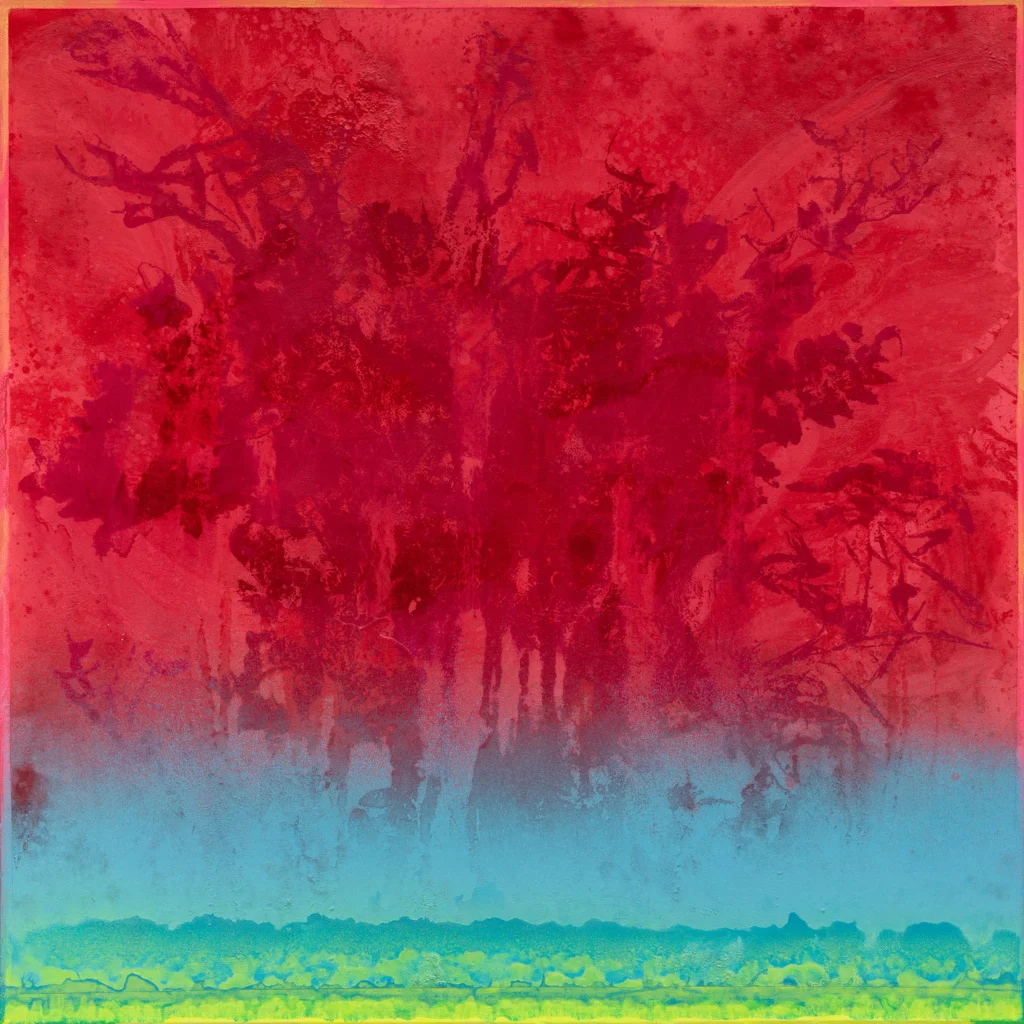
From free-spirited, calligraphic renderings of the Chao Phraya River to dazzling, prismatic vignettes of the sun-drenched fields and narrow alleyways near his home, Tang Chang returned, time and again, to portrayals of his immediate environment and where he stood in relation to it.
This exhibition journeys into Chang’s depictions of place through the prism of Chinese painting aesthetics. Tang Chang: Into the Heart-Mind nods to a recurring image in the Zhuangzi which Tang Chang may well have encountered. Daoism, Buddhism, and Chinese painting were cornerstones in Chang’s worldview; in fact, he translated classics such as the Daodejing and Shitao’s Treatise on Painting into Thai.
The core conceit of this exhibition is the heart-mind (xin) as a mirror, reflecting in its stillness the myriad things of the cosmos. To achieve the clarity of a sage is to attune one’s heart-mind to the Dao — the universal structure and flow that underpins everything in existence.
This approach to cultivating the heart-mind — not just the logical “mind” as in the Anglocentric sense of the word, but also the soul, spirit, consciousness; the whole of a person’s being — is central to classical Chinese aesthetics. The Tang dynasty artist Zhang Zao described painting as “A reaching outward to imitate Creation, / And a turning inward to master the heart-mind (xin).” By bringing one’s internal world in alignment with the very forces of the universe, the artist becomes a medium for its transmission.
Revisiting Chang’s landscapes with the heart-mind as an interpretative tool reveals how he saw painting as a transformative practice of mental, spiritual, and ethical cultivation — of embodying the eternal Dao amid the shifting tides of the transient world. Beyond being scenic representations of an exterior reality, could we consider Tang Chang’s paintings mirror images of his own interiority, his heart and mind? Could we see in his lively visions of place an enduring presence, a relentless desire to stake out a slice of space and time — a world — he could call his own?